
[1] Authors: Emmanuel Abasiubong Bassey and Margaret Harford.
1.0 EXECUTIVE SUMMARY
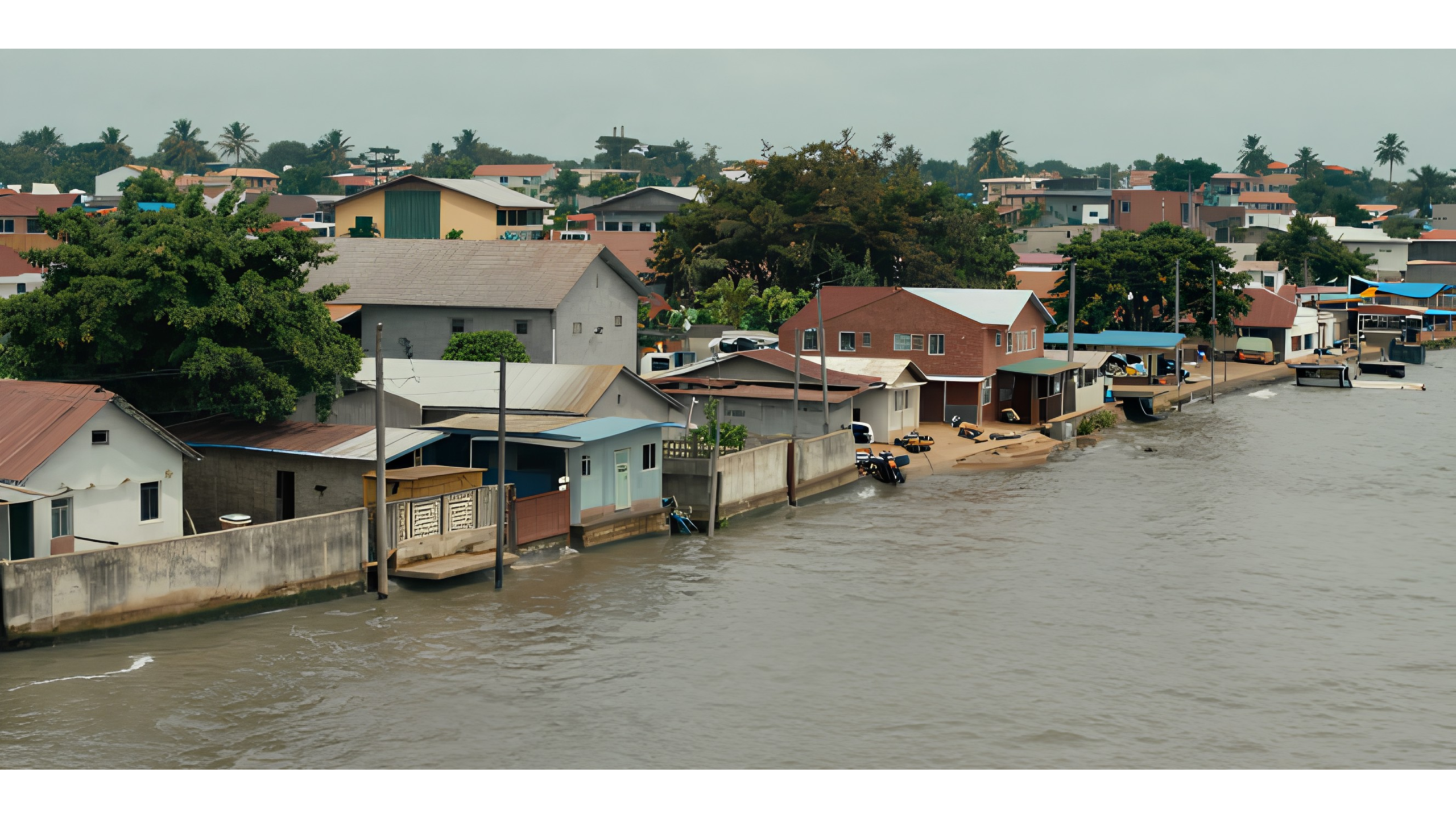
The well documented rapid rise in sea levels in the Gulf of Guinea poses a great threat to the coastal region of Nigeria and the wider Gulf of Guinea. Driven primarily by climate change, its impacts have resulted in an increased rate of flooding, landslides, wetland degradation, coastal erosion and population displacement in Nigeria and other countries on the Gulf of Guinea. In Nigeria, certain coastal states like Lagos, Cross River, Ondo, Bayelsa and Rivers are already suffering the negative impacts of rising sea levels. This would further negatively affect economic development, coastal natural resources, agricultural production and food security in those states, and by extension the rest of Nigeria, if not the world. Thus, it is important to adopt as a matter of priority climate-resilient planning, green investments and practical solutions such as mangrove reforestation, wetland conservation, better drainage and stormwater management systems, offshore breakwaters, beach nourishment, revetments and groynes, etc to build long-term climate resilience in Nigeria and the Gulf of Guinea.
2.0 INTRODUCTION
The Gulf of Guinea has recently experienced an unprecedented sea level surge in its coastal regions. This has resulted in intense flood events, especially within the African coast and the downstream parts of Nigeria. These increasing flooding events are the direct result of climate change, which causes heavy seasonal rainfalls and rising sea levels. To mitigate (and where possible, adapt to) these effects of climate change, it is necessary to understand their underlying causes and the possible actions which may be taken to mitigate or adapt to the effects on the environment.
Leave a Reply