
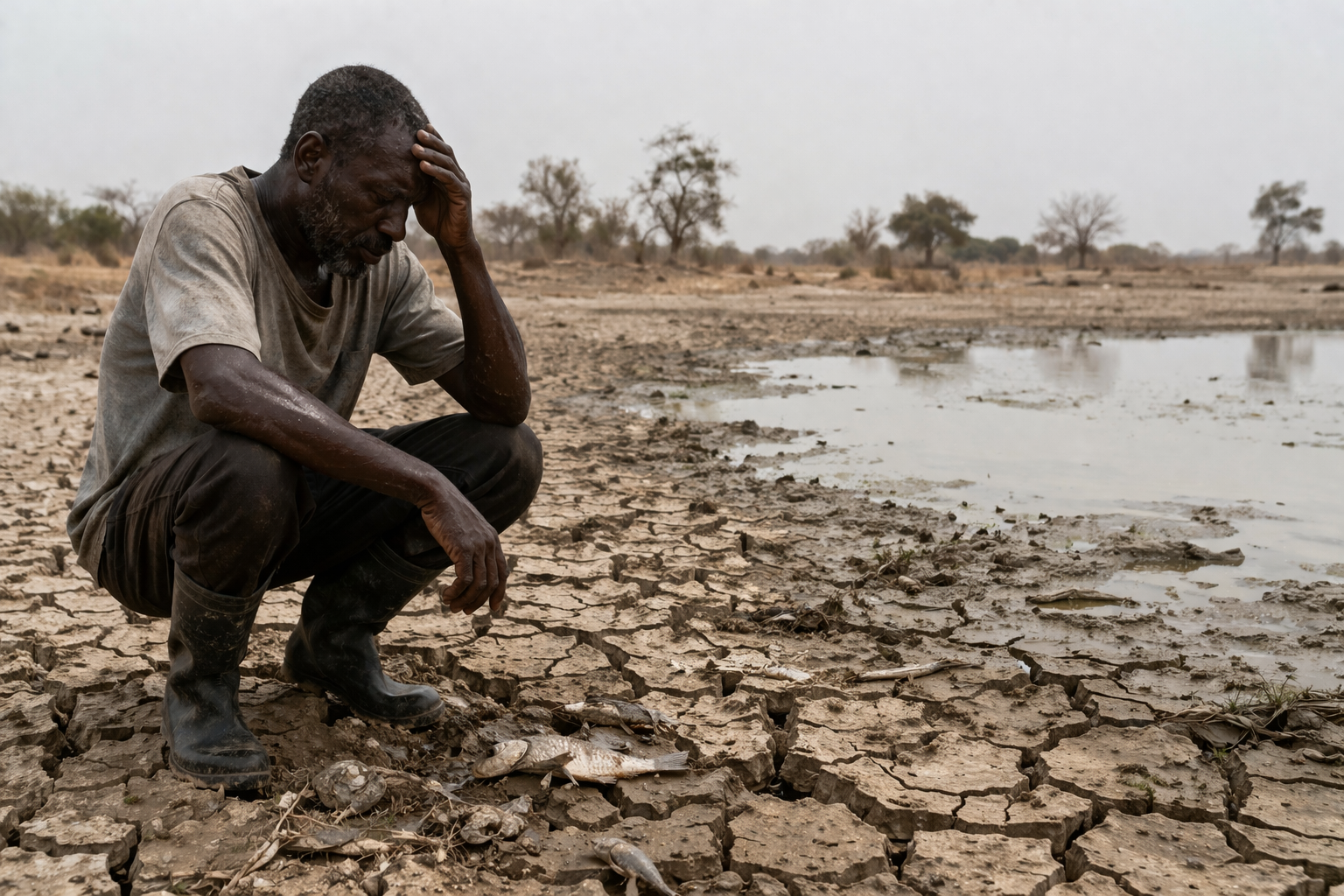
Although the global climate has fluctuated unevenly through the ages, the rate of change of theclimate and warming that the earth has experienced from the final decades of the 20th Century till date has been completely unprecedented compared with previous changes over the past thousands of years. According to the World Meteorological Organisation, the past eleven years (2015-2025) have been the hottest years on record, with 2024 recording the hottest year in recorded history with an average global temperature of about 1.55°C above pre-industrial levels.
In Nigeria, a pattern of increasing temperature has been observed since 1901. This increase was gradual until the early 1970s when the country began to record a spike in temperature which has continued till recent years. Between 1901 and 2005 there was an increase of about 1.1°C in the
average temperature in Nigeria. If this warming trend continues, Nigeria is projected to experience an increase of between 2.5°C and 4.5°C in its average temperature by the year 2100.
A 2014 World Climate Change Vulnerability Index published by the global risk analysis company Verisk Maplecroft classifies Nigeria as one of the ten most vulnerable countries to climate change in the world, while a study conducted by the United State Department for International Development concluded that barring a strong mitigation and adaptation response climate change will cost Nigeria between 6% and 30% of its GDP by the year 2050. This is estimated to be worth between $100 billion and $460 billion.
The above raises a great cause for concern because climate change has impacts on ecosystems, coastal systems, fire regimes, food and water security, health, infrastructure and human security. The impacts will vary from one region to another, with developing countries like Nigeria being
the most vulnerable to the effects of climate due to a general lack of capacity to adapt to the impacts of climate change as a result of poverty and low technological advancement.
The following are in specific terms the observable impacts of climate change in the world.
Leave a Reply